About Bethany Ward
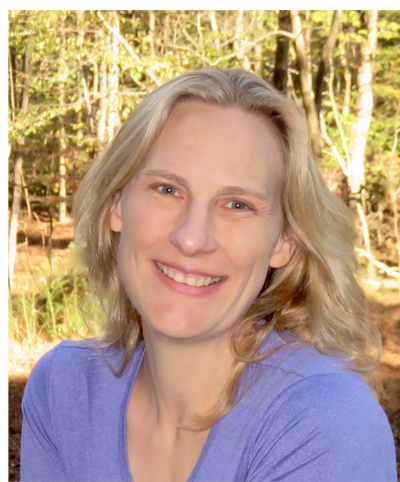
My approach
Although my personal experience with the Rolfing® Ten-Series had a strong emotional component, as a Rolfer, my focus always begins in the physical realm. If clients communicate a desire to explore emotional issues, or emotional stuff comes up, I’m more than happy to facilitate this work. But I see lack of physical motion as one of the most significant health concerns in America. I believe most of our health problems result either directly, or indirectly, from lack of motion.
It is my goal to help clients attain structures that are more functional and more comfortable. One of my greatest challenges is to help people learn to take advantage of Rolfing changes by incorporating greater range and frequency of motion in their lives. If they can do this, they will maintain and continue to improve their physical alignment—and overall health. To this end, I instruct clients in range of motion exercises, stretching with a focus on alignment, and Rolfing movement techniques along with our manual therapy sessions.
How I came to Rolfing® Structural Integration
My road to to this work has been an interesting one. Growing up, I experienced a deep, nagging, sadness that I couldn’t name. Like so many in American society, I dealt with this pain by keeping busy.
After graduating from the North Carolina School of Science and Mathematics in Durham, NC I moved on to Davidson College and attained a BA in psychology. Summer work in psychiatric facilities convinced me that I wanted to work in a capacity that helped individuals make their lives better. I began researching doctoral programs in clinical psychology and, in the meantime, got a job in the business world.
Qualities that were important to counseling and academia turned out to be especially sought after in business. Being able to listen, communicate, problem-solve, and develop strategy, allowed me to excel. I worked in several manufacturing environments, and eventually returned to graduate school—but not as previously planned. I received a masters degree in Business Administration from the University of Georgia in 1997. I specialized in production/operation management and management science, consulting at Delta Airlines as well as production facilities in Athens.
I tell you all this not to toot my horn, but to show you how I got trapped in striving for continuous achievement. My definition of achievement is very different today but, at that time, always staying busy allowed me to avoid dealing with the hidden sadness. With my background in psychology, I’d tried a bunch of therapeutic approaches. Cognitive-behavioral work was useful, but it only took me so far. I felt stuck. I would discover that Rolfing affected patterns that psychotherapy hadn't been able to touch.
After grad school, I had a little time to take stock and decided to try a very non-Western approach to working with my feelings. I got involved in yoga and started meditating regularly. I hoped meditation would allow me to access information I already possessed but was ignoring. During this time, I was suffering with a lot of neck and shoulder pain due to working long hours at a computer. It had been going on for years, getting worse and getting better, but never going away. I heard Rolfing might help.
After my first Rolfing session, something about my chronic sadness shifted. At this time, I’d never heard about the psychological effects of bodywork — I just wanted to get my shoulder fixed! The deep sadness didn’t go away immediately but somehow felt loosened. After my first session, the quality changed to something I could work with.
In addition to making it possible to start letting go of chronic sadness, Rolfing relieved my neck and shoulder pain, improved my posture, and allowed me to drop some unproductive habits. For me, Rolfing was a catalyst for change. For over 25 years of working with clients, I've had the honor of watching Rolfing change peoples' lives for the better — on so many levels.
Why I became a Rolfer
After my profound experience with Rolfing, I realized I wanted to be able to help people experience this process. I remembered what had originally drawn me to counseling—I wanted to help people in terms of personal growth. During graduate school, I was an instructor for Kaplan Testing Services and discovered that I love teaching. My MBA focused on learning to make processes run more efficiently. Rolfing combines all these loves: I help people find ways to enjoy their lives more; I get to teach about anatomy, physiology, and body mechanics; and I work to find ways to make things run more efficiently (I just work with fascia instead of assembly lines).